
The lost art of waiting: What snail mail teaches kids that instant messaging can’t
A letter takes days to arrive, and that's the whole point. Here's what the research says about screen time, dopamine, and why kids need to wait for something good.
Olena Mazur · July 8, 2026
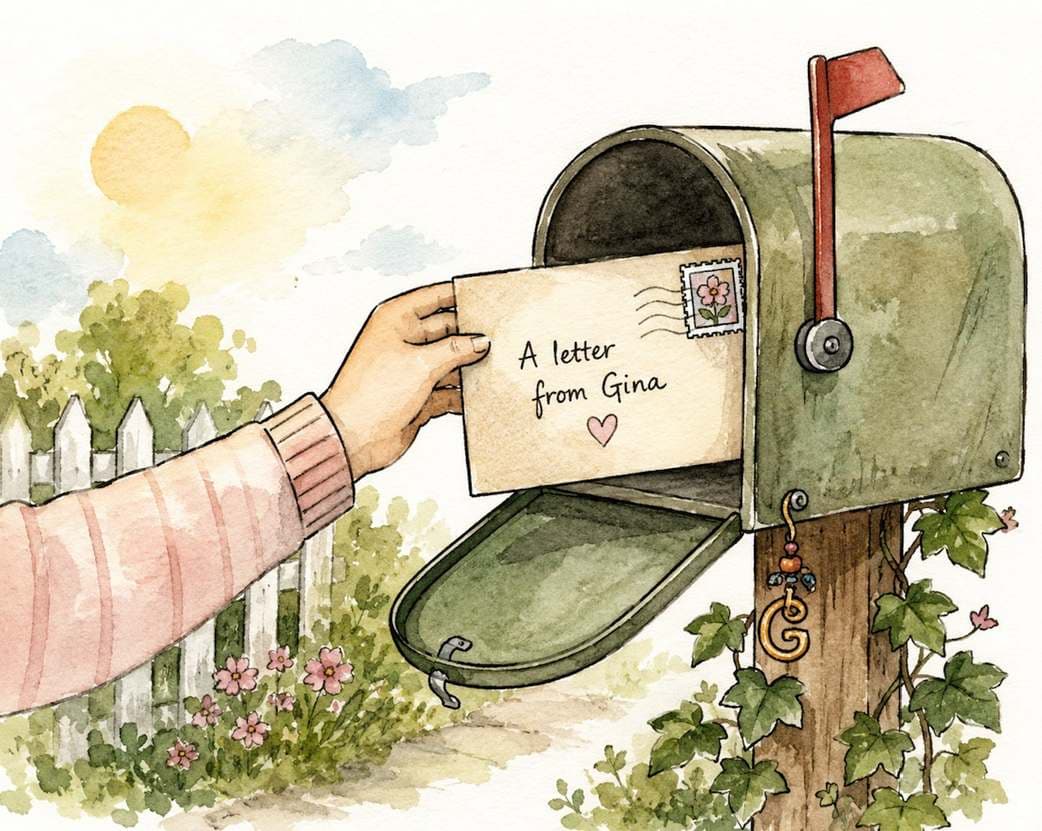
Is your child asking Alexa/Echo to play their favorite song? Or asking how many days are left until their birthday? Do they use your tablet to play an 'educational' game? Very few things in a child's life in 2026 teach them to wait. "Instant" is the design brief for most app creators trying to get your kid onto their app or software.
So, what is so special about a letter? Why are we advocating for a simple letter so much? A simple answer would be: because it takes days (or weeks, sometimes). It is the opposite of "instant". And somehow that's the part your child will remember.
Screen time vs child's dopamine system
Screen time (and we are talking specifically tablets or phones) trains a child's brain to expect a reward the instant they do something: press, scroll, tap, etc. Psychologist Jonathan Haidt (his 2024 book 'The Anxious Generation' became one of the most-cited parenting texts of the decade) has described touchscreens as "behaviorist training devices rather than as passive entertainment like television".
Tap produces a response -> Response produces a small hit of dopamine -> Dopamine makes your child want to tap again.
It's a simple enough loop, but highly addictive. Adults find it extremely difficult to stop scrolling; how can we expect that from a kid who has had unmitigated access to the iPad? Haidt is blunt: this isn't a good setup for young children (or anyone under 16, for that matter) whose brains are still developing. Using an iPad or phone for a three-, four-, or five-year-old works 100% against healthy brain development. No app, no matter how creative, colorful, or promising in terms of teaching your kid to count, read, or understand the solar system, will outweigh the negative effects of screen time in terms of utility.
If the time kids spend on devices feels out of control, you aren't imagining it. Common Sense Media's latest census puts 5-8-year-olds at about 3.5 hours a day. Nobody's doing anything criminal here (well, at least not until the laws change). A tablet is built to get tapped, and it does its job well.
So, why does waiting matter for a developing brain?
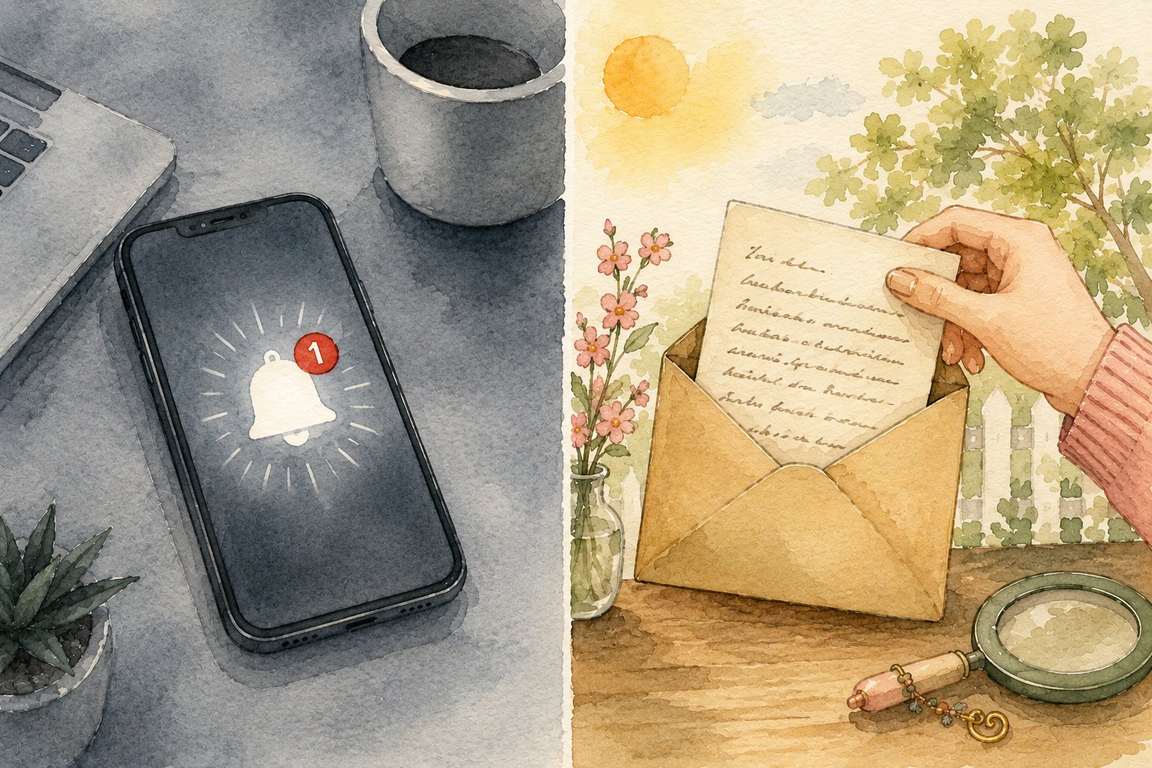
Learning to wait is important - it's one of the few things that teaches a child that their actions and rewards aren't instant and that the delay is welcomed. This gap between doing something and having something good happen to you is where self-regulation grows. Walter Mischel's Stanford 'marshmallow studies' (children were offered one treat now or two if they held off for about 15 minutes) have famously shown this: kids who waited showed better outcomes years later on measures such as stress response and social skills.
A child who does not practice waiting doesn't get much of a chance to build the muscle to do so.
How can old-fashioned mail teach delayed gratification?
Because there's no way to speed it up. A letter cannot be refreshed, tapped, scrolled, skipped, or closed by pressing a small "X" in the top-right corner. There's no read receipt or typing bubble.
A child waiting for a reply to their letter is the same as Mischel's kids who sat with a marshmallow in front of them. Only the letter spreads out over a week instead of fifteen minutes.
This wait and anticipation are the upside here. Dopamine research suggests that the anticipation of a reward can be as motivating as the reward itself. And that's why checking the mailbox every day for a letter can feel like its own small ritual rather than a disappointment.
How a child's brain works when they write a letter
Writing a letter by hand engages fine motor skills and visual processing in ways that typing doesn't. A 2025 study from the Journal of Experimental Child Psychology found a direct link between handwriting practice and both letter recognition and broader cognitive skills, such as numerical reasoning. NPR's 2024 coverage of handwriting research also notes that forming letters by hand, rather than seeing uniform typed text, helps build neural pathways tied to reading ability.
None of that requires a child to be a good writer. A five-year-old drawing a lopsided sun next to three shaky, misspelled sentences is doing more for their developing brain in that moment than the same five-year-old swiping through a "very educational" game on mom's phone.
Sit your kids down and write a fun letter to grandpa!
Why are parents looking beyond screens for their kids' mail?
Because they want the thrill of getting an actual letter addressed to their kid without the logistics (or the risk, which is a completely different topic) of matching their child up with a stranger.
A May 2026 AP report on letter writing noted a real resurgence taking shape, with older pen pal networks surviving into the internet age and new ones launching alongside them. Rachel Syme, the New Yorker writer who ran a pen pal project during the pandemic, described it plainly:
The hunger is there.
Many adults have signed up for similar letter programs because a paper envelope waiting in the mailbox does something a WhatsApp message simply cannot.
How can you start a low-pressure mail ritual with your kid?
Do not make your kid write dozens of letters to all of their friends or an aunt in another state. Start slow - volume is not the game here. Have your child address an envelope to a grandparent, a friend, or a pen pal and drop it in the mailbox together. Then don't check on it and don't track it. Instead, let a few days pass in the ordinary way days pass.
Here are a few ideas that worked for our kids:
- Christmas postcards. One card, one relative, done by mid-November.
- Birthday thank-yous. Skip the video message and hand your kid a card and let them scribble three sentences about how much they liked the gift.
- A postcard from a vacation or a trip. This is our favorite and totally worth a five-minute stop at a souvenir shop. Extra bonus for mailing it from the location. Nothing beats exploring local stamps!
- A letter for no reason - I cannot recommend grandparents enough for this! They will be thrilled to receive a letter from their grandchild. Do expect to see it framed next time you visit them, though :)
Do this a few times and see if it sticks. If it does - protect and nurture the habit.